The night before a big exam, most students do one of two things. They either stay up too late cramming everything they can into the last few hours, or they panic, convince themselves nothing will stick, and spend the evening staring at their notes without really seeing them, prevented through last-minute exam preparation and study strategy coaching services.
Neither approach works. And most students know that, even as they are doing it.
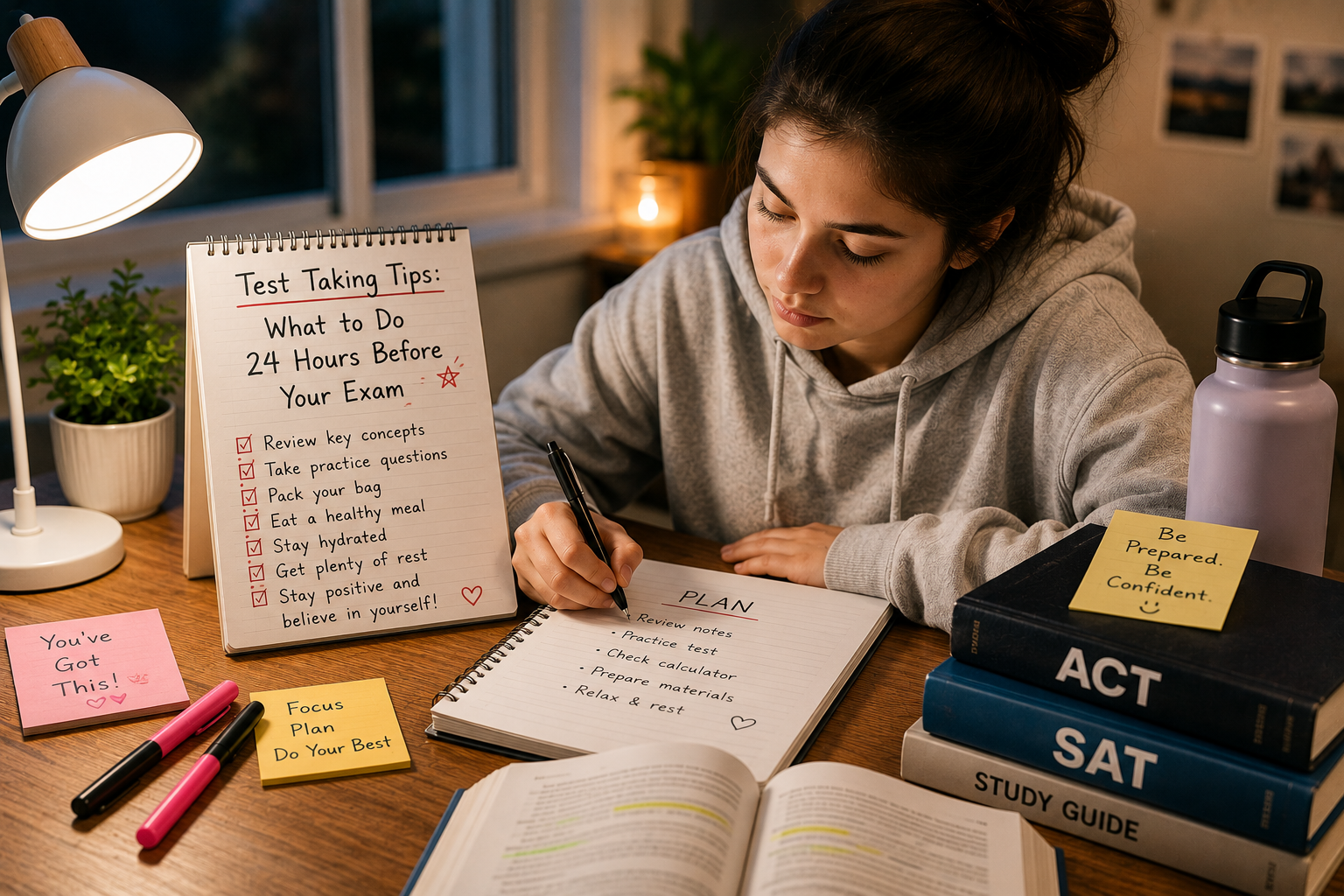
What actually helps is having a plan for those final 24 hours. Not a heroic study marathon. A calm, deliberate routine that sets your mind and body up to perform when it counts.
Here is what that looks like.
Stop Trying to Learn New Material
The 24-hour window before an exam is not the time to introduce new concepts. Your brain needs time to consolidate what it has already learned, and piling on new information the night before disrupts that process.
Use this time to review, not to learn. Go over your notes, revisit key concepts, and work through a few practice problems to confirm what you already know. The goal is to feel steady and familiar with the material, not to cover ground you missed weeks ago.
If there are gaps, acknowledge them and move on. One night is not enough to fix everything, and trying to will only increase your anxiety.
Do a Light Review in the Morning or Afternoon
If your exam is in the morning, do your review the afternoon or evening before. If your exam is in the afternoon, a brief review in the morning works well.
Keep it to one or two hours at most. Work through your most important notes, review any formulas or key terms you want to have sharp, and run through a few practice questions. Then stop.
Studying beyond that point, especially in the final hours before sleep, tends to increase stress without improving retention. You have done the work. Trust it.
Prepare Everything the Night Before
One of the simplest things a student can do is remove all the small decisions from exam morning. Lay out your clothes, pack your bag, confirm what you need to bring, and know exactly where you are going and how long it will take to get there.
This sounds minor. It is not. Exam-day logistics that feel manageable the night before can feel overwhelming when you are already nervous. Getting them out of the way lets you wake up focused on the one thing that matters.
Eat Well and Stay Hydrated
Your brain runs on fuel, and the food choices you make in the 24 hours before your exam have a real effect on how you think and focus.
Avoid heavy meals that will make you sluggish and skip the excess sugar that leads to a crash mid-exam, supported through exam day nutrition guidance and student wellness planning services. Stick to meals that are balanced and familiar. This is not the time to try something new. Drink water consistently throughout the day, and if caffeine is part of your regular routine, keep it at your normal level rather than increasing it.
The morning of your exam, eat something. Even something small. An empty stomach is a distraction you do not need.
Protect Your Sleep
This is the one students most often sacrifice, and it is also the one that matters most.
Sleep is when your brain organizes and stores what you have studied. Cutting it short, even by a couple of hours, impairs memory recall, slows processing speed, and makes it harder to manage stress during the exam. No amount of last-minute studying makes up for what a full night of sleep does for your performance.
Aim for at least seven to eight hours. Set an alarm, put your phone down, and give your brain the rest it needs to do its job.
Have a Simple Morning Routine
On exam day, keep your morning predictable. Wake up with enough time to move through your routine without rushing. Eat breakfast, get some fresh air if you can, and avoid the temptation to scroll through your notes one more time on the way out the door.
A few minutes of calm before you walk in is worth more than a few more minutes of cramming. You are not going to learn anything new in the car. What you will do is arrive more settled, and that matters.
Manage Your Mindset
Nerves are normal. Every student feels them, and a small amount of anxiety actually sharpens focus, managed through test anxiety coaching and exam confidence building services. The goal is not to eliminate nervousness but to keep it from taking over.
If you feel your anxiety rising in the hours before the exam, try slowing your breathing. Inhale for four counts, hold for four, exhale for four. Do this a few times. It is simple, and it works.
Remind yourself that you have prepared. You know more than you think you do. The exam is your opportunity to show that, not a verdict on your worth as a student.
During the Exam, Pace Yourself
When you sit down, take a moment to read through the full exam before you begin. Understand what is being asked and plan your time accordingly.
Start with the questions you feel most confident about. Getting momentum early settles your nerves and leaves time for the harder questions at the end. If you get stuck, move on and come back. A question you skip is not a question you fail.
And when you finish, if time allows, review your answers before you hand it in. Not to second-guess yourself, but to catch anything you may have missed.
At InSightIQ, we help students build the skills and confidence they need to perform at their best, in exams, applications, and beyond. Our personalized counseling services are designed to meet your student exactly where they are.